
Skip links
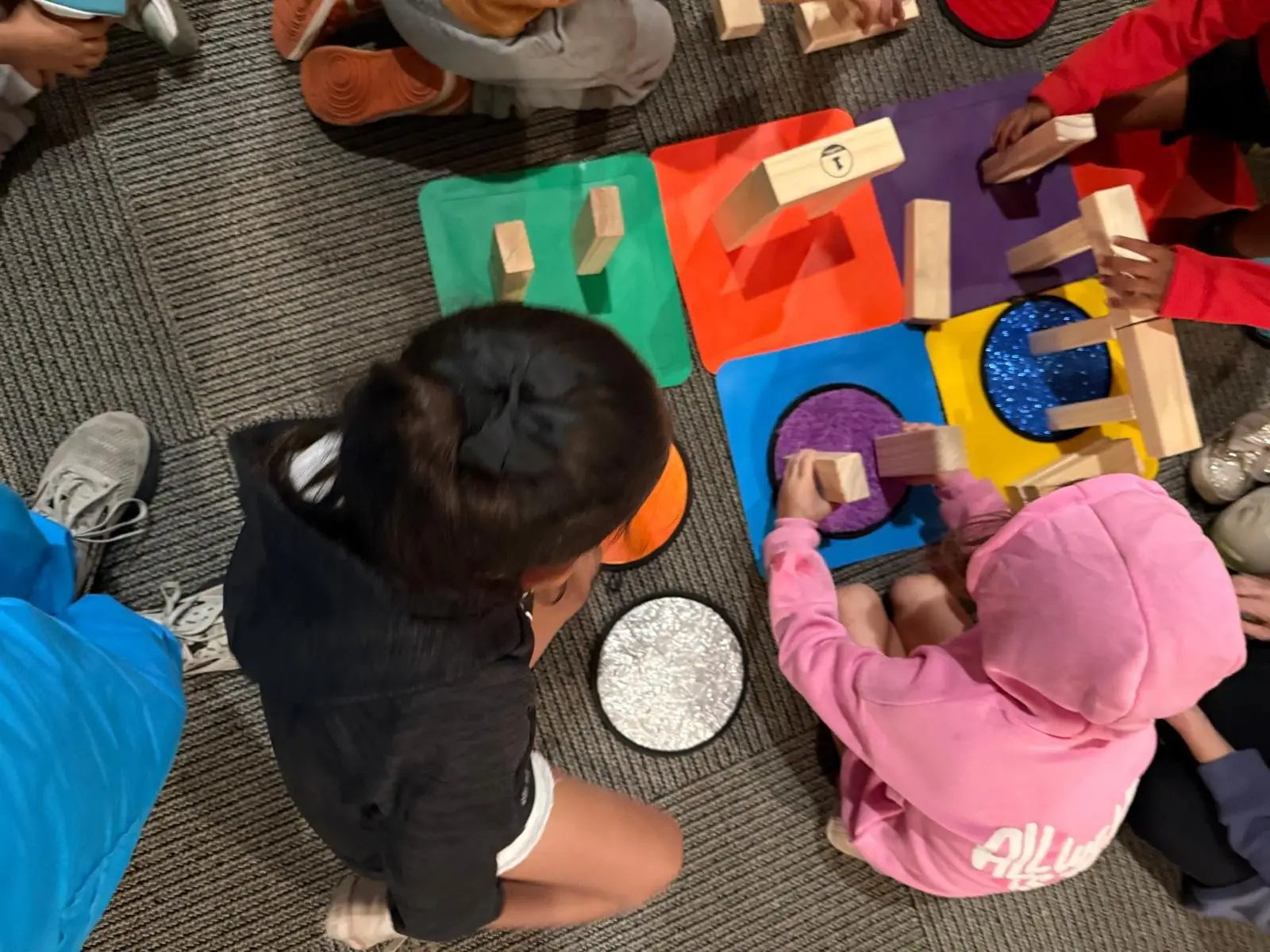
Several children sit on the floor building structures with wooden blocks on colorful tactile mats, adjusting and repositioning pieces while working together.

Codie Adventure Pilot

Early Elementary PBL: Story-Based Coding & Problem Solving using Codie Block Materials

Coding Blocks Adventure Pilot Summary

Children ages 5–6 participated in four OT-informed PBL sessions integrating Codie Block materials, whole-body movement, sequencing, early coding logic, spatial awareness, and SEL cues through storytelling.

Overview of the Codie Block Pilot:

Children ages 5–6 participated in four OT-informed PBL sessions integrating whole-body movement, sequencing, early coding logic, spatial awareness, and SEL cues through storytelling.

Parents:

✔️ 14 children (K–1)
✔️ Two early elementary classroom settings
✔️ Four 45–60 minute sessions per group
✔️ OT-informed project-based learning format
✔️ Limited screen, physical coding blocks and a shared multistep narrative
✔️ Emphasis on predictable routines and flexible supports for diverse learners

Problem / Need / Rationale

Across early elementary grades (K–2), children are showing increased challenges in executive function, social-emotional regulation, and communication. Many struggle with planning, sequencing, flexible thinking, and collaborating effectively with peers. Story-based, limited screen coding PBL offers a developmentally aligned way to strengthen these skills while introducing early STEM practices. This pilot explored how OT-informed coding PBL can support EF, SEL, communication, and inclusion for diverse young learners.

Coding Blocks Adventure Quantitative Findings
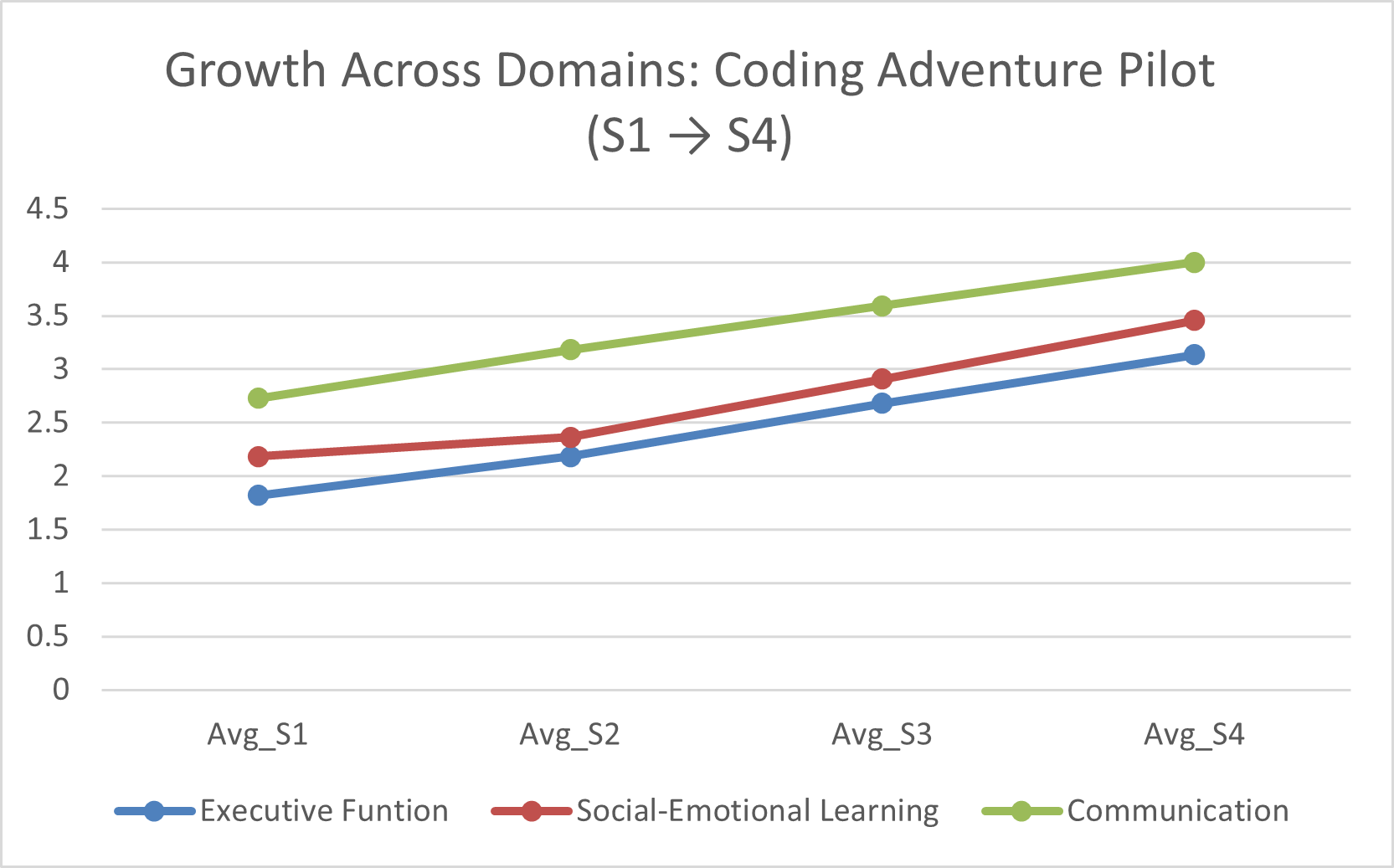
  Growth Across Domains: Coding Adventure Pilot (S1 → S4)

Children demonstrated consistent growth across Executive Function, Social-Emotional Learning, and Communication from Session 1 to Session 4. Communication showed the highest end score, EF the strongest gain, and SEL a steady upward trajectory. This pattern reflects increasing independence, collaboration, and flexibility as children engage in repeated story-based coding challenges.
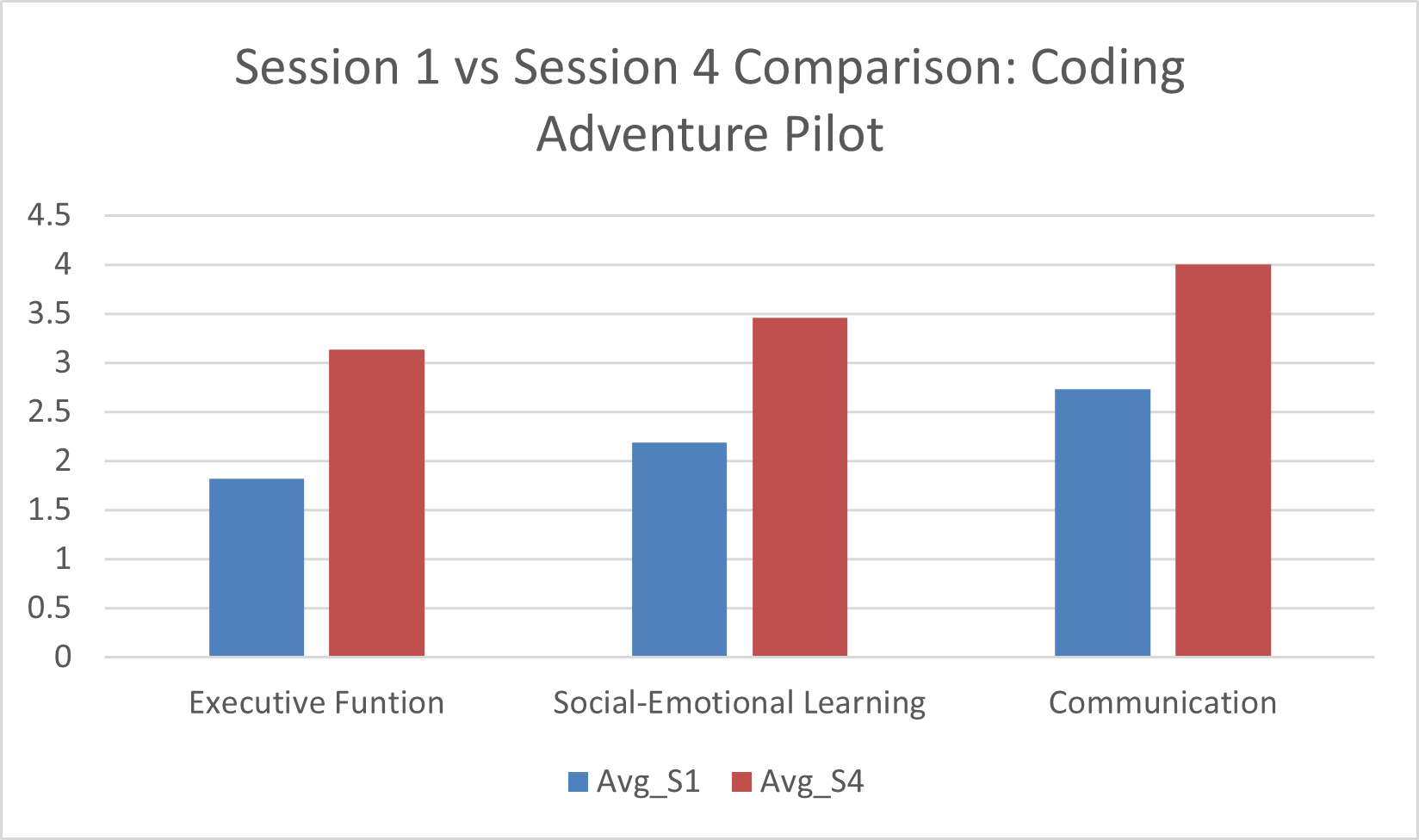
Session 1 vs. Session 4 Comparison: Coding Adventure Pilot 

Across all three domains, children showed higher scores by Session 4, with the largest gain in executive function. These increases reflect stronger sequencing skills, improved frustration tolerance during debugging, and greater expressive communication during collaborative coding work.
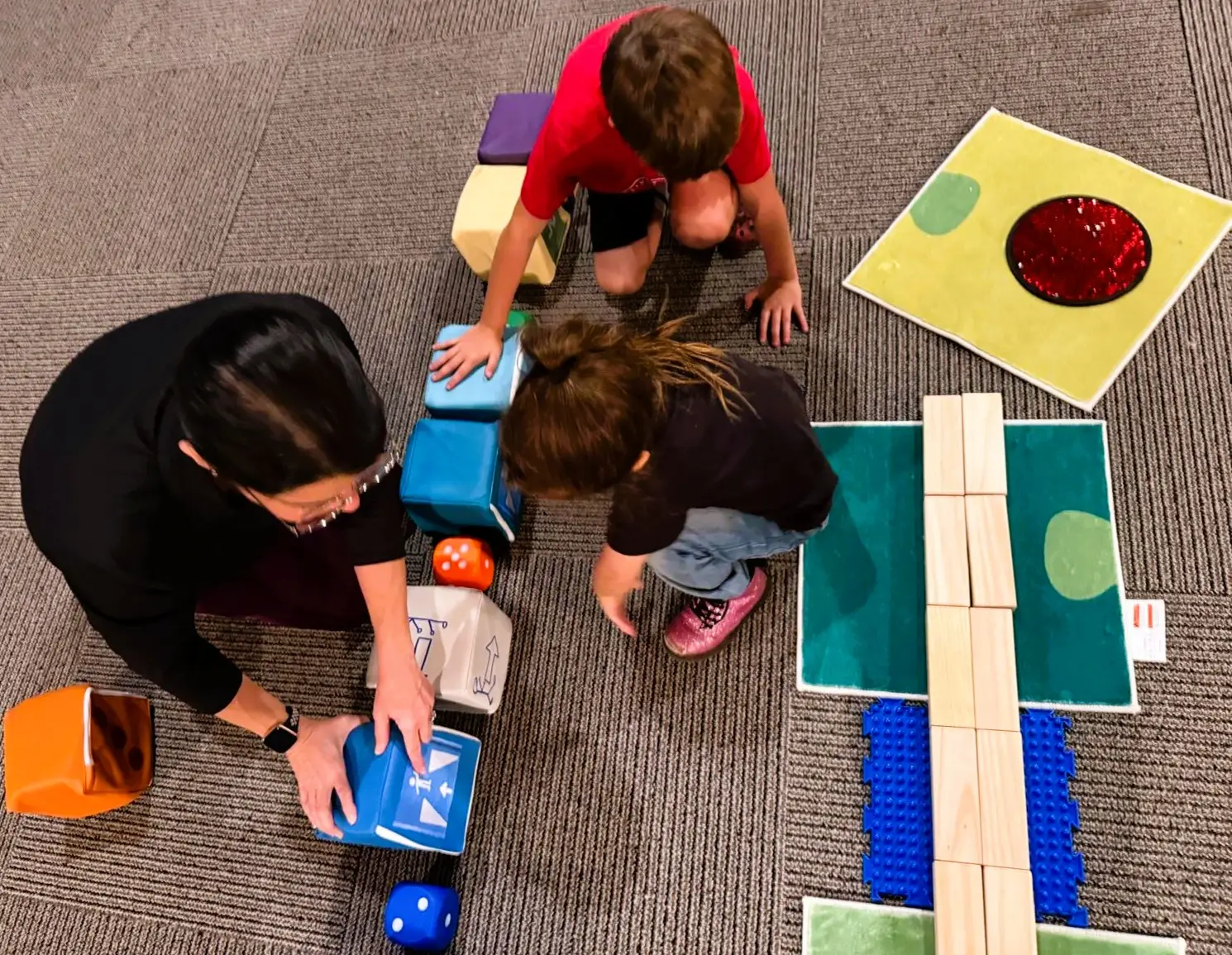
Two young children and an adult arrange large foam cubes with directional arrows on the floor alongside sensory mats and wooden planks, creating a movement-based coding sequence.

Codie Blocks Adventure Qualitative Findings
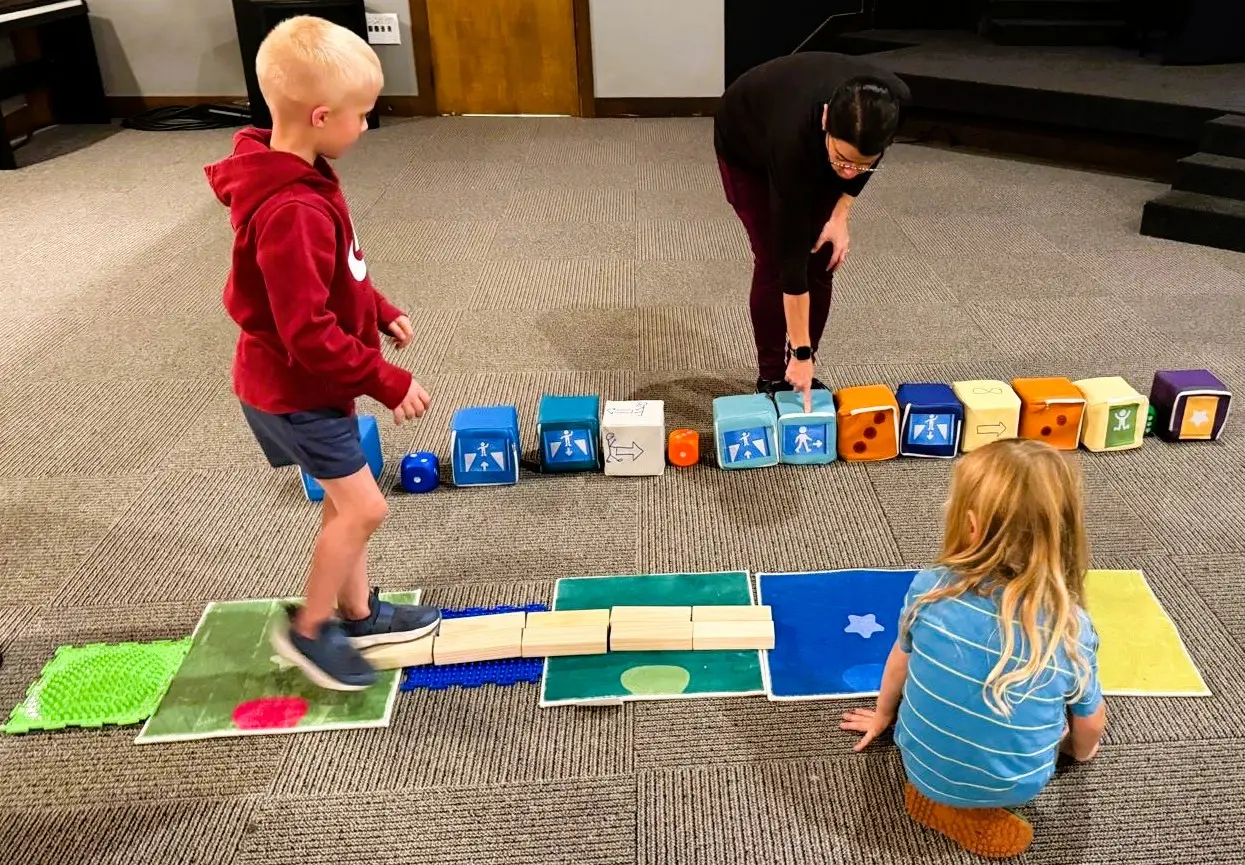
Children collaboratively arrange large directional cubes and follow a movement-rich coding path, demonstrating early sequencing, planning, and working memory skills. This multisensory, embodied learning approach reduces cognitive load, increases regulation, and provides accessible entry points for diverse learners. Facilitator modeling supports participation without diminishing independence, reflecting shared-pilot findings about the power of predictable routines and visual scaffolds.

Two children walk along a tactile story-themed path they built while an adult points to large directional coding blocks, helping them follow the sequence they wrote to navigate the broken bridge and reach the destination.

Codie Blocks Adventure Qualitative Findings
Children physically enact the program they created to help Codie cross a broken bridge and reach a friend’s house. As they move step-by-step through their coded path, the facilitator provides visual cues to support sequencing, attention, and working memory. This early phase of code execution strengthens foundational executive function skills and introduces the concept of debugging as children notice mismatches between their written code and their physical navigation.

Several children sit on the floor building structures with wooden blocks on colorful tactile mats, adjusting and repositioning pieces while working together.

Codie Blocks Adventure Qualitative Findings
In small groups, children construct and refine simple structures using wooden blocks and tactile mats. This collaborative play invites natural opportunities for communication, turn-taking, and conflict resolution while introducing foundational debugging concepts – testing ideas, noticing errors, and trying new solutions. These shared tasks strengthen cognitive flexibility and social engagement, core goals of the Coding Adventure Pilot.

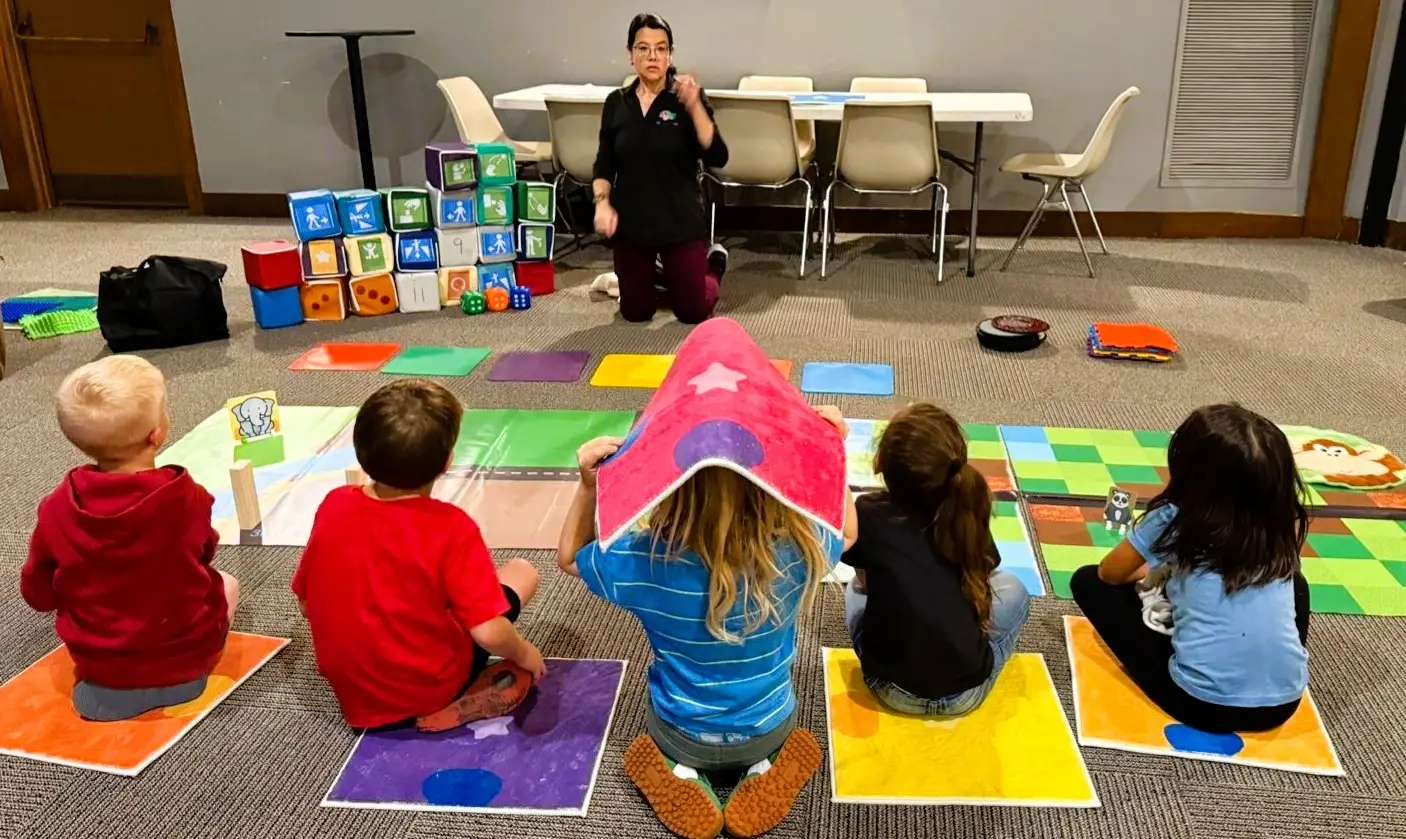
A facilitator kneels in front of a group of young children seated on individual colored mats, introducing the next activity while coding cubes and materials are displayed behind her.

Codie Blocks Adventure Qualitative Findings
During whole-group instruction, children sit on individualized mats that support regulation and personal space while the facilitator introduces the next coding challenge. Consistent routines, visual anchors, and narrative elements help sustain attention and reduce cognitive load, enabling diverse learners to engage confidently. This structure reflects the Coding Pilot’s emphasis on UDL-aligned practices that promote participation and emotional readiness.

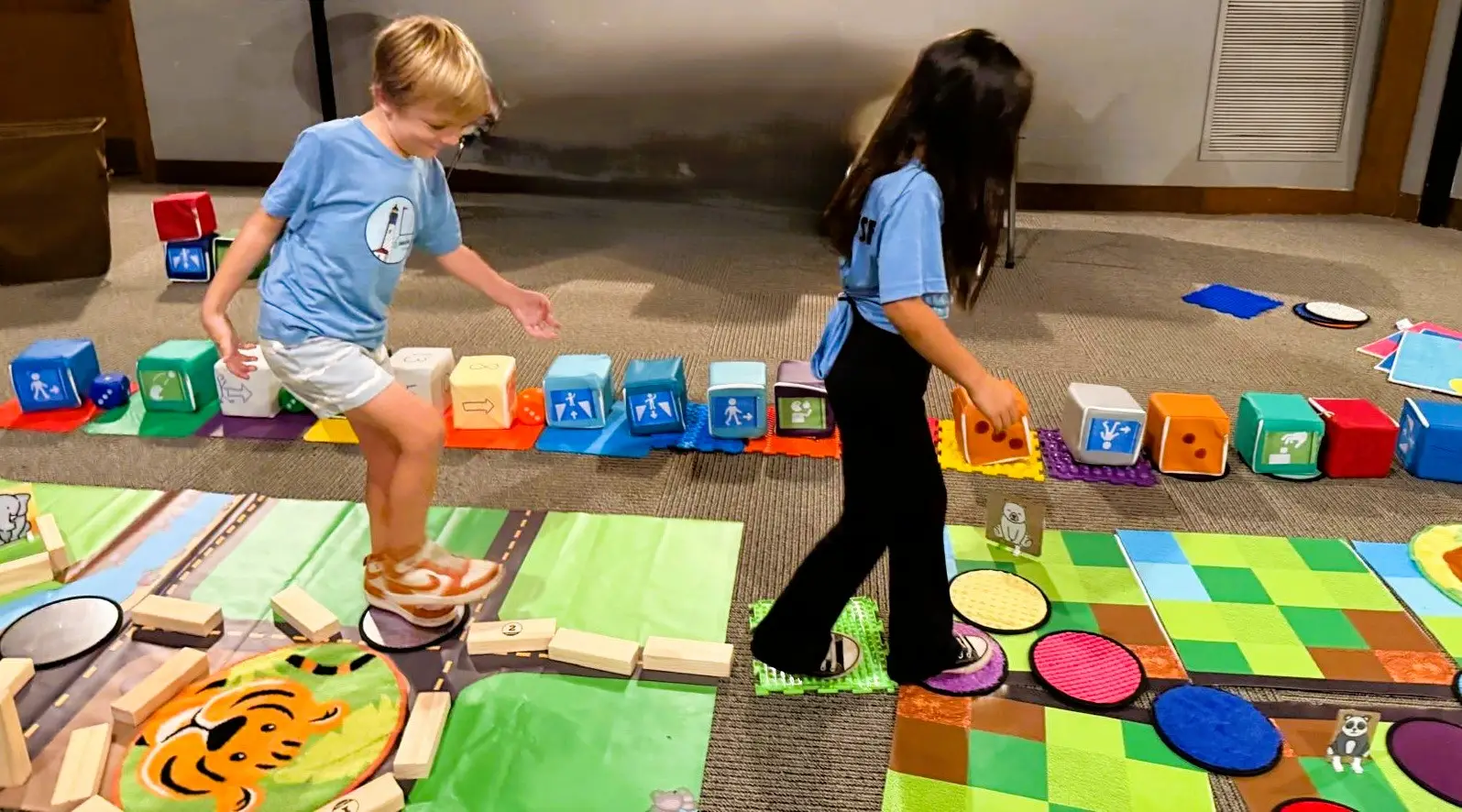
Two children walk along a story-coded floor path, following a sequence they created using large foam coding blocks. They test the code step-by-step while classmates (not visible) watch for errors to help debug the sequence.

Codie Blocks Adventure Qualitative Findings

Children test the program they created by walking through a story-coded path, following each directional command they wrote with the large coding blocks. As they execute the sequence, their classmates observe from the sidelines to identify errors—“bugs”—that interrupt the path. This embodied debugging process strengthens sequencing, working memory, cognitive flexibility, and collaborative problem-solving, reflecting the Coding Pilot’s focus on early computational thinking through multisensory, OT-informed PBL.

Supporting Participation for Diverse Learners

Children benefitted from predictable routines, movement-rich story prompts, visual cues, and OT-informed scaffolds. These supports reduced frustration, encouraged flexible thinking, and enabled all children to meaningfully engage in planning, coding, and collaborative debugging.

Children’s Voice & Educator Observations

Themes Across Classrooms

  • Collaboration required the most consistent adult support.
  • Students needed scaffolding for planning, sequencing, and organization.
  • Storytelling and large-body movement were strong engagement drivers.
  • Debugging language supported a culture of iteration and psychological safety.
  • Children who usually hesitate to speak initiated more ideas and questions.
  • Role assignment increased cooperative engagement for older children.

Children’s Voices Show Internalized EF & SEL Skills

“We fixed the bug!”
 → Reflects pride in debugging, growth in cognitive flexibility, shifting from “mistakes are bad” to “mistakes are information.”

“Let’s try another way.”
 → Demonstrates adaptive problem solving, flexible thinking, and willingness to persist.

“I want to tell the next part of the story.”
 → Indicates self-initiation, increasing expressive communication, and deeper narrative engagement.

Observing Teacher Voices

“Children who rarely speak up were suddenly offering answers and asking questions.”

“Students checked in on next steps and followed the sequence with intention.”

“Roles helped our older learners collaborate instead of taking over.”

Implications
for K–2 Schools

  • Early coding can strengthen EF, SEL, communication, and foundational STEM practices—not just technical skills.
  • Story-based, hands-on coding offers a developmentally aligned entry point into collaboration, sequencing, and debugging.
  • OT-informed routines, visuals, and structured roles support participation for diverse early learners.
  • With predictable scaffolds, even very young children can meaningfully engage in computational thinking and cooperative problem-solving.

Codie Blocks Adventure Pilot Findings Summary

  • Children demonstrated measurable growth across executive function, social-emotional learning, and communication from Session 1 to Session 4.
  • Repeated story-based coding challenges encouraged planning, sequencing, and flexible thinking.
  • Debugging routines supported persistence and emotional regulation, especially during errors.
  • Collaborative storytelling increased engagement, narrative expression, and communication—even among children who typically hesitate to participate.
  • Whole-body and hands-on coding block experiences supported sustained attention, problem-solving, and joyful learning.

Qualitative observations showed increased collaboration, resilience during debugging, and greater expressive communication – highlighted by child reflections like:
“We fixed the bug!”“Let’s try another way.”“I want to tell the next part of the story.”

These findings show that story-driven, hands-on coding PBL builds the core developmental skills children need for early academics and STEM readiness.

Key Takeaway

Story-based, limited screen coding PBL is a developmentally aligned, inclusive pathway for building early EF, SEL, communication, and foundational STEM skills. With the right supports, even the youngest learners can collaborate, problem-solve, and engage confidently in computational thinking.

“Our expert consultations bring a rare blend of clinical expertise and creative problem-solving, helping you refine your product to its fullest potential.”

This website uses cookies to improve your web experience.
Explore
Drag