Skip links
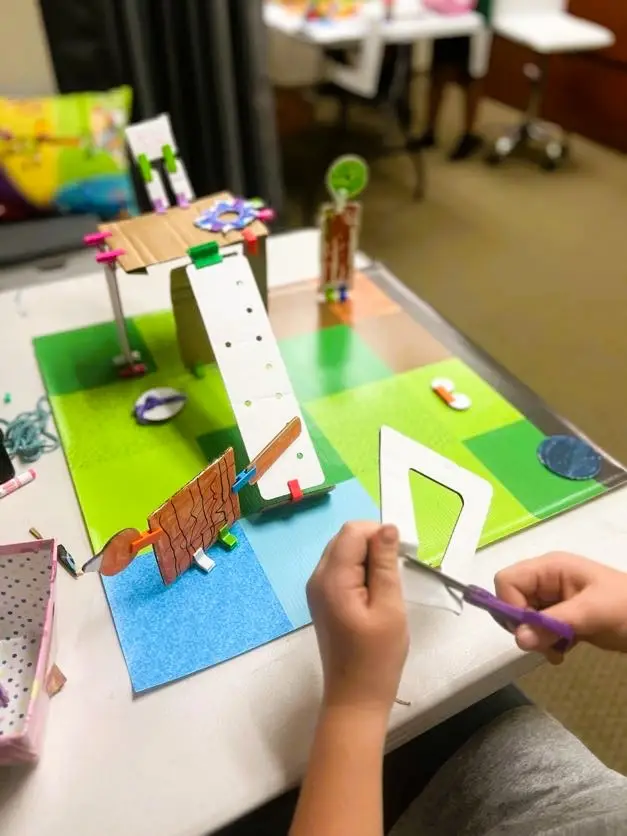
A child cuts a cardboard piece while working on an early-stage animal habitat model. The prototype includes ramps, platforms, and hand-built structures connected with colorful clips. Materials are spread across the table, showing active testing and adjustment during the hands-on engineering task.

Zoo Pilot

Upper Elementary PBL: Hands-On Habitat Design Challenge using 3DuxDesign Materials

Build a Zoo Pilot Summary

Children ages 8–10 (Grades 3–5 functioning range) from microschool, private, and homeschool settings participated in a 6-session OT-informed Zoo Engineering PBL unit – using 3DuxDesign materials to design animal habitats. Children represented diverse learning profiles including autism, ADHD, OCD, anxiety, dyslexia, dyscalculia, and typically developing. Children engaged in iterative building, testing, collaboration, and reflection. These practices naturally strengthen executive functioning, problem-solving, and SEL competencies while supporting diverse learners through multisensory, movement-rich design work.

Problem / Need / Rationale

Across K–5 classrooms, students struggle with planning, sequencing, frustration tolerance, and collaborative problem-solving – skills foundational to both academic performance and real-world readiness. PBL offers a powerful path forward, but many educators need models that integrate executive function, SEL, and STEM practices in an accessible, inclusive way.

This Zoo pilot explored how structured, hands-on engineering challenges can support whole-child development in general education and neurodiverse learners.

Overview of the Zoo Pilot

The Zoo pilot included 16 students across two classes (subdivided into small groups of 2 – 4 children) each participating in:

  • 6 structured PBL engineering sessions
  • Warm-ups targeting motor planning & material fluency
  • Collaborative design challenges requiring EF, communication, and flexibility
  • Reflection routines promoting metacognition and SEL growth

Facilitators used moderate scaffolds to promote independence, peer problem-solving, and creativity.

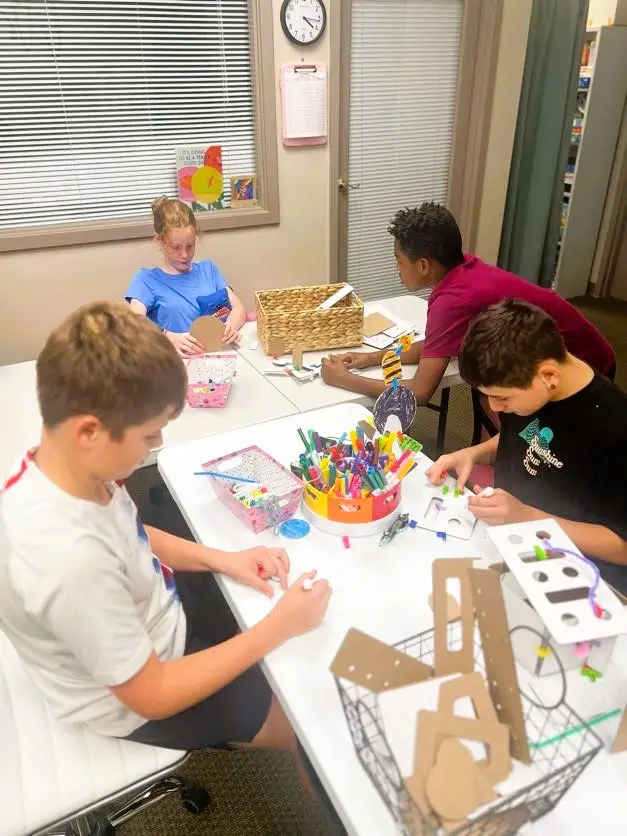
Four upper-elementary students sit at a table covered with cardboard pieces, connectors, and art materials. Each student is cutting or assembling small components, working independently with focused attention during the early preparation phase of the habitat-building task.

Codie Blocks Adventure Qualitative Findings

Children engage in focused, hands-on exploration by cutting cardboard pieces, testing connectors, and preparing components for later structural assembly. This early phase of the Zoo Pilot supported material fluency, fine motor control, and planning, while providing a regulation-friendly warm-up that reduced cognitive load before the main engineering challenge. The quiet independence visible in this moment helped build confidence and readiness for collaborative problem-solving later in the session.

A child cuts a cardboard piece while working on an early-stage animal habitat model. The prototype includes ramps, platforms, and hand-built structures connected with colorful clips. Materials are spread across the table, showing active testing and adjustment during the hands-on engineering task.

Codie Blocks Adventure Qualitative Findings

Children engage in hands-on construction by cutting out structural pieces and attaching components to an emerging animal habitat model. This phase of the Zoo Pilot emphasizes fine motor coordination, tool use, and spatial planning, as children adjust shapes and connectors to improve stability and function. Iterative refinement—visible here in the modification of individual parts – supports executive function development through planning, flexible thinking, and problem-solving, while maintaining high engagement in a multisensory PBL task.

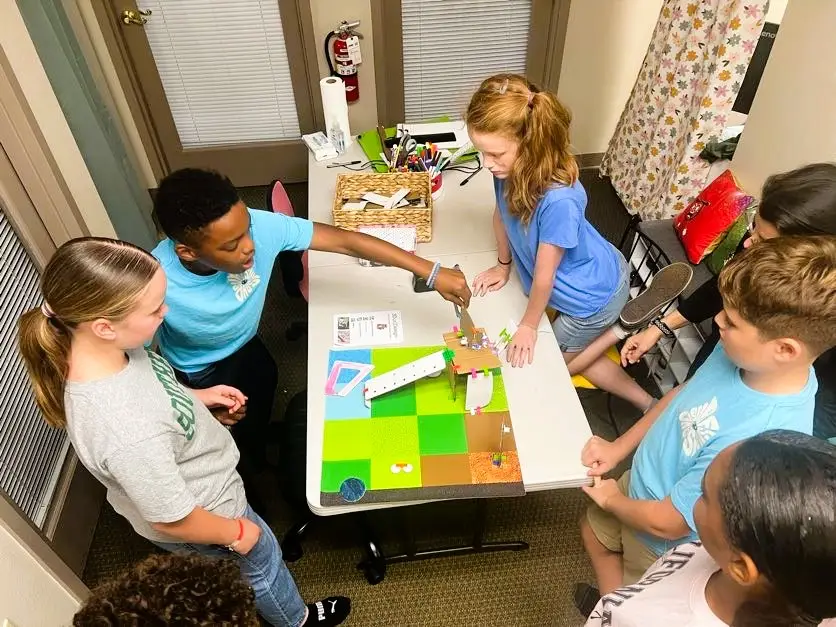
A group of eight upper-elementary students stand around a completed habitat model on a table. One student points to a feature on the model while others watch and listen, engaging in group discussion about the design.

Codie Blocks Adventure Qualitative Findings

Children gather around a completed habitat model to explain features, discuss function, and reflect on design decisions. This collaborative review phase strengthened communication, perspective-taking, and STEM reasoning, as children articulated how different components supported animal needs and structural stability. Peer-led explanation—visible here as one student points out specific elements—reflects growing confidence, leadership, and executive functioning, including planning, working memory, and cognitive flexibility.

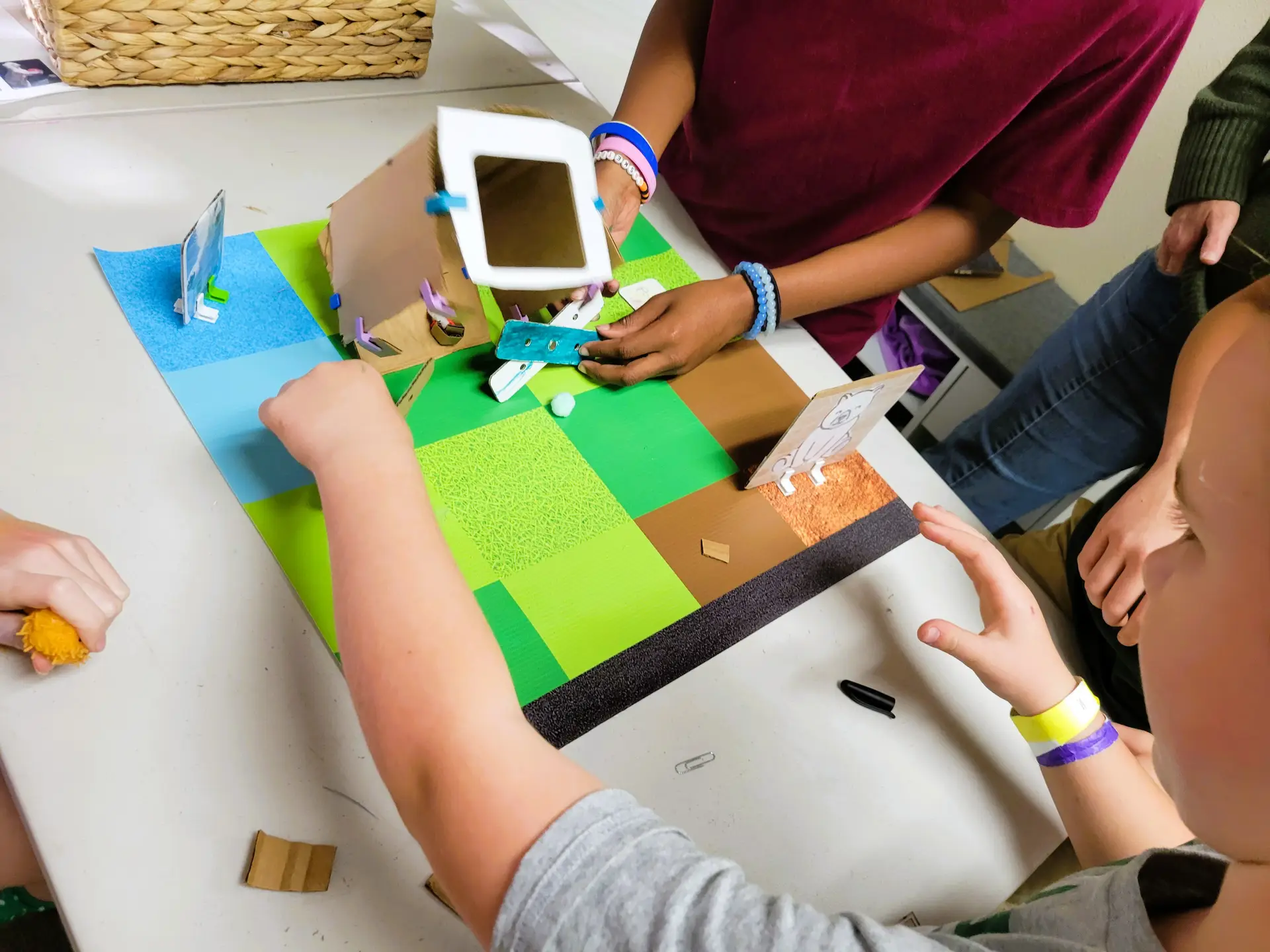
A group of children adjusts a cardboard habitat model on a table. One child secures a connector under a raised structure while others reach in to help stabilize and refine the design during a collaborative problem-solving moment.

Codie Blocks Adventure Qualitative Findings

Children work together to strengthen a habitat structure by adjusting connectors, repositioning supports, and testing balance in real time. This troubleshooting phase reflects key executive function demands – planning, cognitive flexibility, and persistence – as well as essential SEL skills such as communication and shared problem-solving. Through hands-on iteration, students discover how small changes in angle, connector placement, or base support impact stability and function, deepening their emerging STEM reasoning.

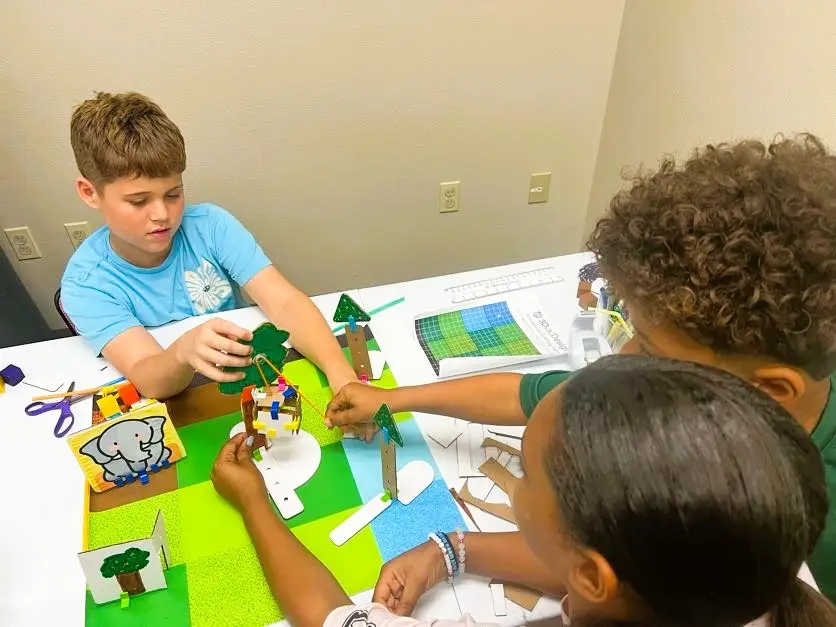
Three upper-elementary students work together on a pulley system attached to a cardboard habitat model. They adjust string tension and components to lift the elephant’s food toward a tree platform.

Codie Blocks Adventure Qualitative Findings

In this hands-on engineering task, students design and refine a pulley system that lifts the elephant’s food into the tree. As they adjust tension, angles, and connector positions, they engage in authentic mechanical reasoning and iterative testing. The teamwork required to stabilize the system and coordinate each step strengthens communication, planning, working memory, and cognitive flexibility – key cross-pilot findings demonstrating how multisensory PBL supports whole-child development across EF, SEL, and STEM domains.

Zoo Challenge 

Quantitative Findings

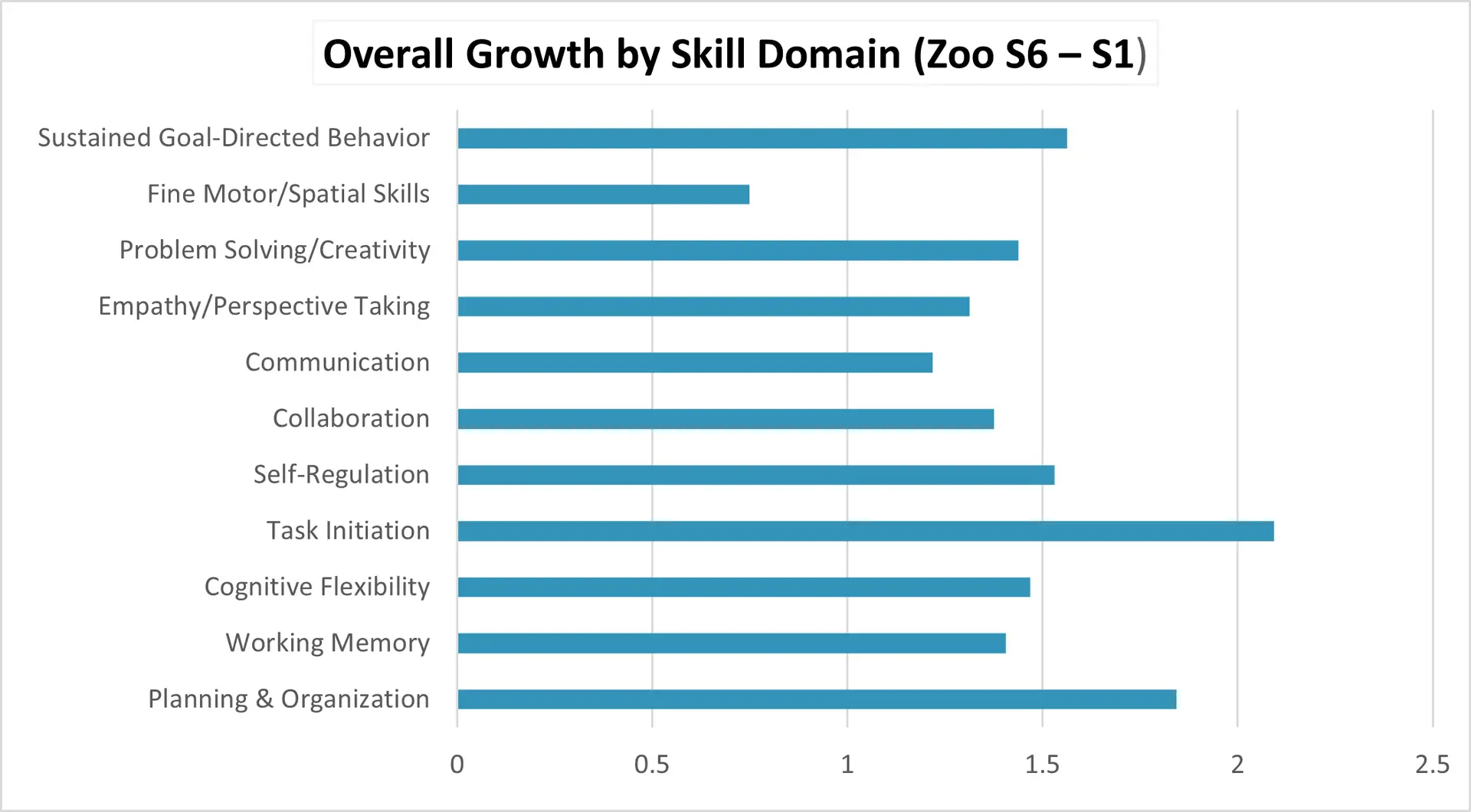
Children demonstrated measurable growth in all 11 developmental domains, with the strongest gains observed in executive function skills such as task initiation, planning and organization, cognitive flexibility, and self-regulation. These improvements highlight the effectiveness of PBL as a vehicle for whole-child development. Supplementary analysis shows that brief warm-up tasks significantly improved students’ material fluency, design decision-making, and engineering readiness prior to the PBL challenge (see QR code for full data).
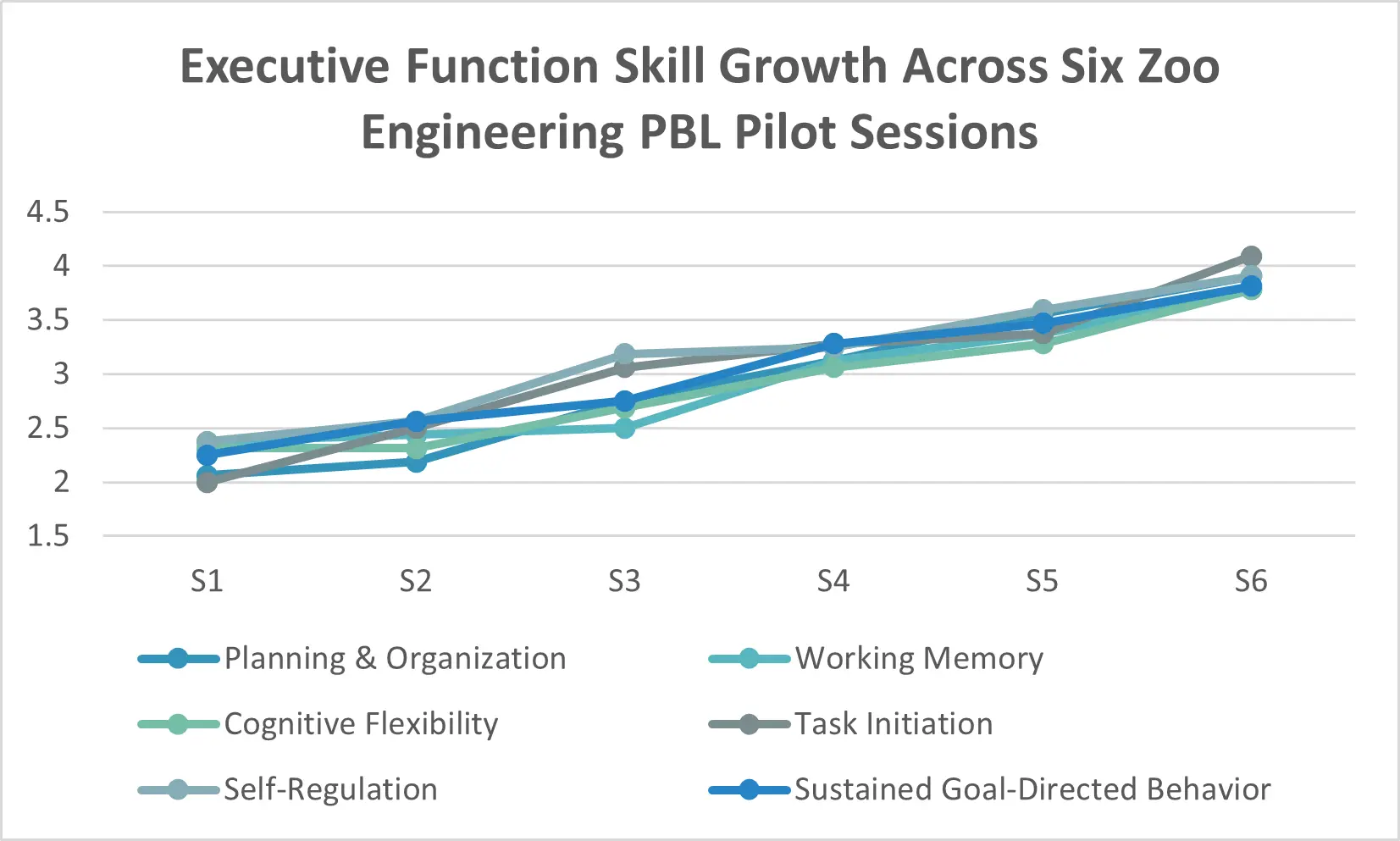
Children showed steady, meaningful gains in all six executive function domains – planning, working memory, cognitive flexibility, task initiation, self-regulation, and goal-directed behavior – across the six-session Zoo PBL experience. These improvements indicate that hands-on, collaborative engineering challenges effectively strengthen the cognitive skills essential for learning and classroom participation.
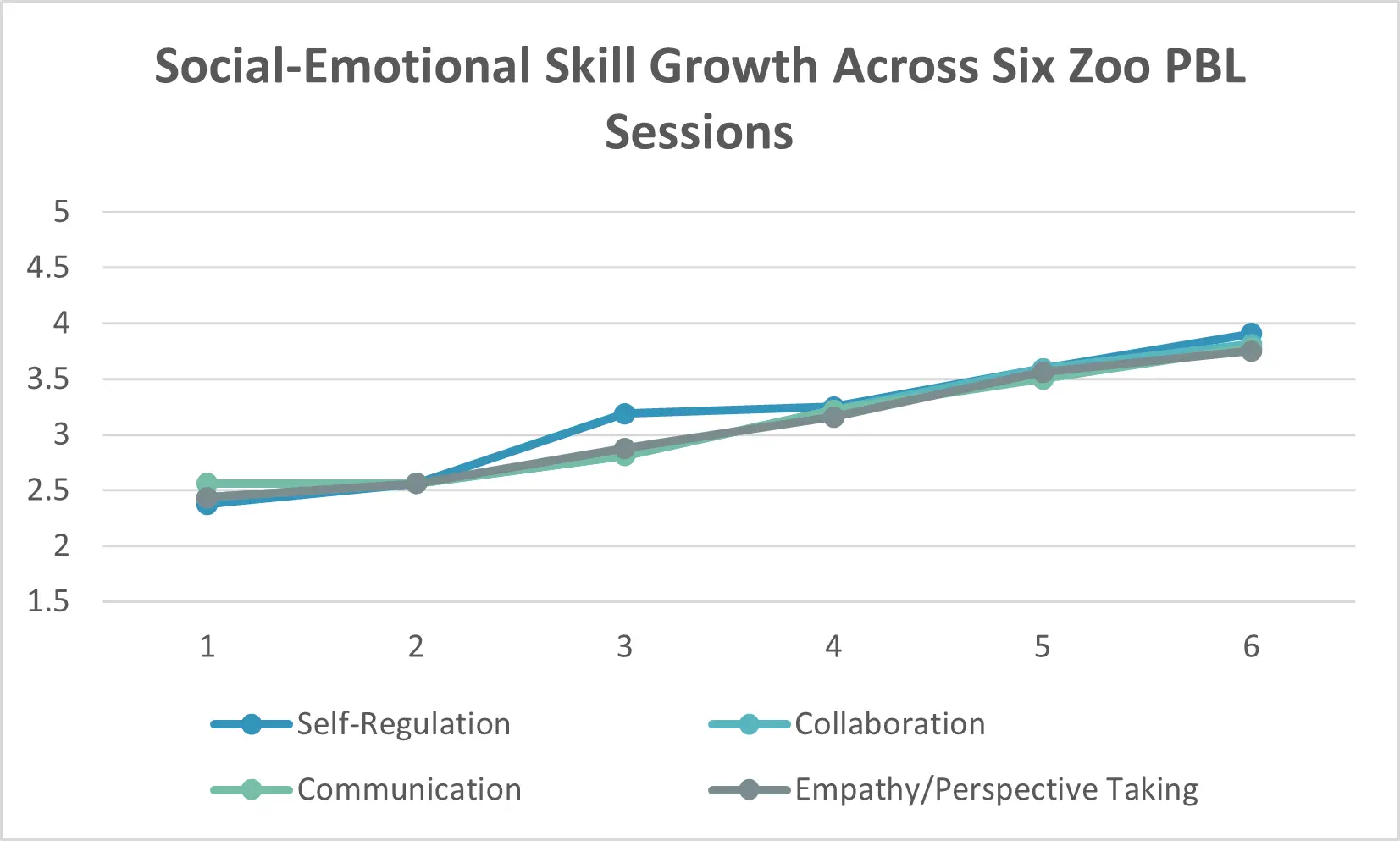
Children showed consistent growth in collaboration, communication, and perspective-taking across the six sessions. The team-based engineering challenges created natural opportunities for shared problem-solving, negotiation, and social engagement – core components of SEL development.

Qualitative Findings – Student Voice & Educator Insights

Children described increased confidence, creativity, and ownership as they progressed through the Zoo engineering challenge. Many reported feeling more capable of solving problems, adjusting designs, and working with peers to achieve shared goals.

Children’s Reflections:

  • “At first I didn’t think I could build it, but when I kept trying different connectors, it finally worked.”
  • “We got better every time we worked together.”
  • “Mistakes helped us find a better way.”
  • “I didn’t know I was a good engineer until this.”

Children also began using engineering language (e.g., structure, support, angle, base, stability), reflecting emerging STEM identity.

Facilitator Observations:

  • “Children who struggle with attention stayed focused longer during building.”
  • “Some children demonstrated leadership I hadn’t seen before.”
  • “The warm-ups reduced frustration and set children up for confident engagement.”
  • “Their problem-solving discussions grew more complex each session.”

Facilitators noted improvements in task initiation, collaboration, self-regulation, and flexible thinking, particularly for children who typically need more support during traditional academic tasks.

Implications for Schools

Hands-on, OT-informed PBL supports:

  • Executive Function Activation: Natural opportunities for planning, shifting, working memory, and sustained attention.
  • Whole-Child Engagement: Linking motor, cognitive, and social-emotional systems.
  • Inclusion & UDL: Accessible entry points for neurodiverse learners.
  • STEM Identity Development: Students see themselves as capable designers, engineers, and problem-solvers.
  • Scalable Classroom Practice: Minimal prep, high engagement, and real-time adaptability.

Zoo Findings Summary

  • Students demonstrated consistent growth across all EF and SEL domains.
  • Warm-ups enhanced engineering readiness and material fluency, reducing cognitive load during main tasks.
  • PBL fostered teamwork, resilience, and flexible thinking.
  • The Zoo pilot offers a replicable model for inclusive PBL in upper elementary settings.

Key Takeaway

OT-informed PBL meaningfully strengthens executive function, collaboration, and problem-solving for learners with diverse needs – especially when project-based challenges involve hands-on materials, storytelling, clear roles, and iterative design.

Download ,
Supplemental Materials

🎯 Early Childhood Coding Through Story, Movement & Play

A complete quantitative summary of student growth across 11 developmental domains, including EF and SEL trend analyses and domain-by-domain interpretation.

An in-depth examination of how warm-up tasks improved material fluency, engineering decision-making, and readiness for hands-on PBL.

An educator-friendly guide with OT-designed strategies for implementing inclusive, executive-function–rich PBL in K–5 classrooms.

A collection of student quotes, facilitator observations, and thematic insights capturing the lived experience and emotional growth of learners.

This website uses cookies to improve your web experience.
Explore
Drag